
2026 Masciantonio Prize Winner
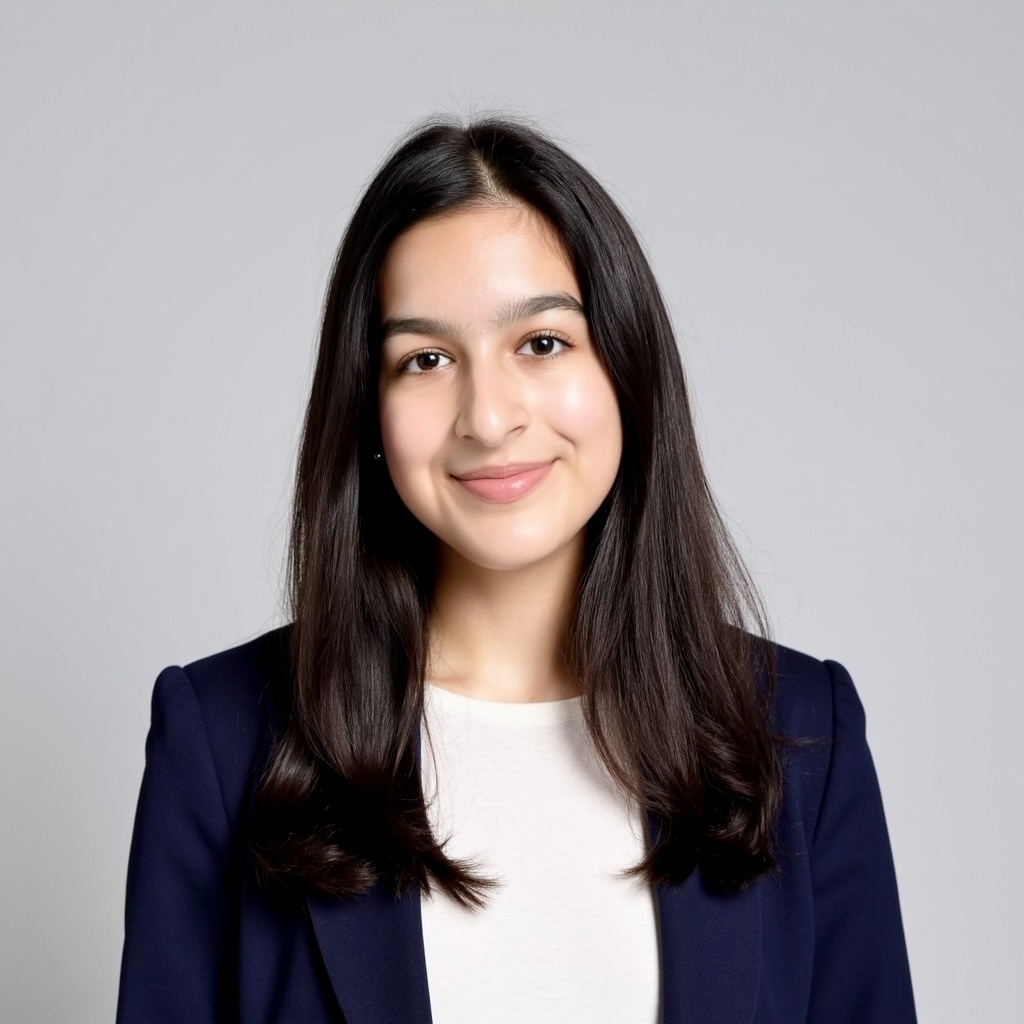
Congratulations to Maira Zaidi for winning the Vergilian Society’s Masciantonio Prize for Inclusive Excellence in Latin or the Classical Humanities! She is a rising senior at Sidwell Friends School in Washington, DC, where her teacher is Jake Watson. Maira will use her $500 prize to support Latin Literacy Camps which she has organized. We are publishing Maira’s essay here. Enjoy!
The first time I told my Nani (grandmother) that Latin was my favorite subject, she looked at me, confused. “You’re studying Latin?” she asked. “Why not study Spanish or Chinese? They’re going to be more useful,” she said. While the question was not entirely unreasonable, and it might seem unexpected for someone with my background to study Latin and Classics, I have found a deeper, more meaningful connection between the Ancient Mediterranean and my South Asian-Pakistani heritage.
I chose to study Latin in middle school out of curiosity. While I expected vocabulary lists and grammar charts, I encountered an entire civilization instead. Through Latin texts, I discovered Roman history, mythology, culture, and philosophy. I learnt that Romans were not culturally isolated. Greek philosophy shaped Roman education; Etruscan and Anatolian traditions influenced Roman religion, and trade routes connected the Mediterranean to Africa, the Near East, and beyond. All this sounded surprisingly familiar. As I delved deeper, I found remarkable similarities between the Ancient Mediterranean and South Asian civilizations, as well as striking parallels in the linguistic evolution of Latin and Urdu. As a first-generation Pakistani-American, I grew up speaking Urdu at home. The language of my parents and grandparents was shaped by influences of Persian, Arabic, and other regional languages. Urdu uses the Persian alphabet and draws heavily on Farsi and Arabic, much like Latin derives its own alphabet from Etruscan and Greek roots. In essence, the Ancient Mediterranean was not a singular culture,but a case study of cultural crossroads that influenced one another through trade, education, language, and religion.
While studying Latin in school and participating in programs and competitions, I did not often see students from my cultural background represented in the field of Classics. Rather than viewing that as discouragement, I embraced it as an opportunity to become a bridge builder. I founded Acta Diurna Classics, an outreach initiative dedicated to keeping Latin and the Classics accessible and inclusive to students from diverse backgrounds. Through Paideia’s Teaching Literacy in Latin Aequora Grant, along with grants from Ascanius and Classical Association of the Atlantic States, I have organized Latin Literacy Camps for young students within both my local and South Asian communities. These camps introduce Latin and Greco-Roman history to students who might not otherwise encounter it. I also publish a daily Acta Diurna Classics Instagram gazette, a website blog, and will be hosting a forthcoming podcast featuring educators and scholars to promote interest and engagement in Classics.
Academically, I have pursued Classics with both passion and curiosity. At Sidwell Friends School, I have completed Latin I–IV and will complete Advanced Latin V in my senior year. I have been honored as a Top Award Winner on the CAMWS International Latin Translation Exam and the National Latin Exam (Summa Cum Laude, Perfect Paper, Gold Medal). This past summer, I also completed two undergraduate college-credit courses at Harvard University’s Department of Classics: Introduction to Historical Linguistics and Beginning Greek. I further deepened my Latin studies through advanced programs with the Classical Association of Scotland and the Classical Association of Ireland, and I have had the honor to conduct original research under the mentorship of Dr. Victoria Fendel at the University of Oxford.
Through my journey, the greatest lesson Classics has taught me is something much broader – that cultures are never isolated. The story of humanity from the ancient world to today is one of connection and cultural exchange. In many ways, my own life reflects those same cultural crosscurrents – a Pakistani heritage, an American upbringing, speaking Urdu at home with family, English outside with friends, and Latin in school with my classmates. Classics has helped me see that the story of human civilization has always been one of connection.
And in that story, there is room for voices like mine.